Wednesday, November 30, 2011

Happy Birthday To:

Mark Twain
November 30, 1835

I don't believe any of you have ever read Paradise Lost, and you don't want to. That's something that you just want to take on trust. It's a classic... something that everybody wants to have read and nobody wants to read.

- "Disappearance of Literature" speech

Wednesday, November 16, 2011

Unsung (and Unseen) Characters

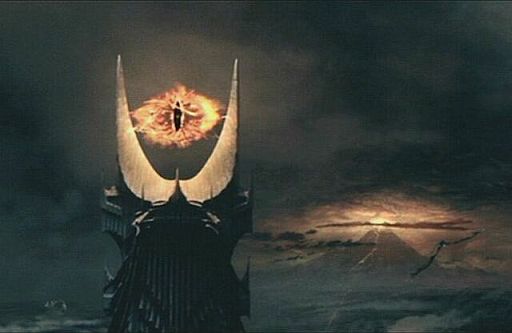
Over at Guardian Books, they've got a great discussion going about literature's unseen characters. These are "literary creations who never make an appearance on the main stage, but whose presence nevertheless hovers over the text, influencing thoughts and actions."

Some examples that the article gives are Sauron from The Lord of the Rings, the lieutenant in The French Lieutenant's Woman, Mr. March in Little Women, Mrs. Churchill in Emma, and the eponymous Godot. There are also some fantastic ideas in the comments section.

How about you? Do you know of any literary characters (not dead) who play a significant role in the story and yet are never seen or heard?

Tuesday, November 8, 2011

Holiday Swap

It's that time of year again! All you book bloggers out there head over to the Book Blogger Holiday Swap site and sign up for this year's event. I had so much fun with this last year, and I look forward to shopping for my "Secret Santee". Be sure to sign up by midnight on Novemeber 11 to get in on the action. Let the holidays begin!!

Saturday, November 5, 2011

Snow Country

The road was frozen. The village lay quiet under the cold sky. Komako hitched up the skirt of her kimono and tucked it into her obi. The moon shone like a blade frozen in blue ice.

In 1968, Yasunari Kawabata became the first Japanese author to win the Nobel Prize for Literature. The Nobel Committee cited "...his narrative mastery, which with great sensibility expresses the essence of the Japanese mind" as the reason for his win, and acknowledged three specific works in awarding the prize: The Old Capital, Thousand Cranes, and Snow Country, which many believe to be his masterpiece, and an enduring classic in Japanese literature.

The Plot:

Shimamura is a wealthy loner from Tokyo. Like many wealthy men of the time, he enjoys taking vacations to the mountain hot springs for rest and relaxation. He frequents one in the Japanese snow country, a region of the island nation that receives quite a bit of snow during the winter months. While there he enjoys the exercise of hiking and skiing, the revitalization of the hot springs, and the companionship of a mountain geisha named Komako.

The novel chronicles three of his trips to the hot springs, and his turbulent relationship with the pretty geisha. Will they be able grow closer together and form a lasting bond, or will their love become as cold and distant as the winter landscape?

My Review (Caution-Spoilers):

This was my first taste of Asian literature, so I really wasn't sure what to expect. I've seen some reviewers call Kawabata's writing "haiku in prose", and I think that accurately describes the sparseness and spareness of the novel.

Though the plot itself is very basic, the novel itself is not. It is a very painful story, bleak and bare as a winter scene. Shimamura is someone who cannot connect with anything or anyone on a deeper level. An example of this is how he reads a lot about ballet, considering himself an expert, and yet has never actually seen it in person. Komako is young and fresh, and initially she throws herself into her passion for Shimamura with all of her heart. But she soon realizes that it is futile, "wasted love". These are two people who in many ways are trying desperately to connect with one another, and yet no matter how hard they try, they are never able to fully come together. It reminds of the Melanie Penn song "Glass Pane":

You were lying in my arms
Not so long ago, hello
Never meant each other harm
From coming too close
Head right for the glass and don’t look back
My heart cracks
You can never see the end a comin’

Indeed, Shimamura and Komako are like two birds trying to fly together only to crash into the glass that separates them. Kawabata's story is one of love and human connection thwarted by invisible forces.

But though the story itself is painful, the writing is not. Kawabata is beautifully descriptive of the Japanese countryside, especially of the winter scenes. I was reading this book in late summer, and I still felt an icy grip on my heart as I read the haunting passages. "In this snow country, cold, cloudy days succeed one another as the leaves fall and the winds grow chilly. Snow is in the air. The high mountains near and far become white in what the people of the country call “the round of the peaks.” Along the coast the sea roars, and inland the mountains roar – “the roaring at the center,” like a distant clap of thunder. The round of the peaks and the roaring at the center announce that the snows are not far away." In Kawabata's writing, you can see the barrenness, the coldness, and the futility that is found in the Shimamura and Komako's relationship. It is achingly beautiful and, in my opinion, deserves the high honor that the Nobel Committee bestowed upon it.

Though it was different from pretty much everything else that I have ever read, I really did enjoy Snow Country. It has a unique and tragic beauty to it and I highly recommend it to anyone who is looking to step into the world of the literature of the far East.

Saturday, October 29, 2011

Fakespeare?

If you've been on the internet at all lately, you have probably heard the buzz that is going on about the new Shakespeare movie. No, this is not a new adaption of one of his plays; and no, this movie isn't a straight up biopic of Shakespeare's life. It is a film that centers around the idea that Shakespeare never wrote any of the great plays that history has credited to him.

This is not a new idea, by any means. Scholars have been debating his authorship of what is arguably the single most important body of work in the English language. Any number of other Elizabethans have been suggested like Sir Francis Bacon, Christopher Marlowe, William Stanley Earl of Derby, and (as in Anonymous) Edward de Vere Earl of Oxford. But though this idea has been bounced around for centuries, today's audience seems to be taking particular offense to it. In Warwickshire, England (Shakespeare's home turf), they have been temporarily covering Shakespeare's name on area signs to protest the film. Dr. Paul Edmondson of the Shakespeare Birthplace Trust said "This film flies in the face of a mass of historical fact, but there is a risk that people who have never questioned the authorship of Shakespeare's works could be hoodwinked."

Ron Rosenbaum over at Slate.com wrote an article describing the top 10 things he hated about the film. "The conspiracy theorists who waste time trying to browbeat the credulous into thinking that the works of William Shakespeare were actually ghostwritten by Someone Else (in "Anonymous", it’s the Earl of Oxford) can’t stop. They have invested too much of their lives in the chuckleheaded fantasy to give it up now, despite how ridiculous the film reveals it to be." The actors in the film insist that there should not be this sense of ownership over Shakespeare, but rather an appreciation for the works themselves, regardless of the author was.

So what is my take on all of this? I haven't seen the film (and it's not exactly at the top of my list), but I do have a few thoughts on the subject. First off, if you really think that the average Joe is going to start questioning Shakespeare's authorship based on a movie, you're crazy. The average Joe couldn't care less if these plays and poems were written by Shakespeare, the Earl of Oxford, or Dr. Seuss. And as with most conspiracy theories, this one will be accepted by some and ignored by the rest. Secondly, you have to remember this is Hollywood, and historical (or literary) fact is not their number one (two, three, four, etc.) priority. I used to spend a lot of time nitpicking films and getting mad if they didn't hold true to the original, but I've slowly been giving that up and simply taking film for what it is...entertainment. Finally, the actors in this film are right in a way. Ultimately, it doesn't matter who the author of these works was. The important thing is that they were written, and continue to enthrall, surprise, and teach us centuries later. Beowulf is no less important for our not knowing who the author was, and the same can hold true for Hamlet, The Tempest, and Richard III.

What do you think? Are people right to be upset? Is Shakespeare's authorship something that must be protected? Or is this all much ado about nothing?

Wednesday, October 26, 2011

The Enchanted Places

A couple of months ago, I celebrated my birthday by treating myself to an afternoon at my local library. I didn't go in with a list, a plan, or a time limit. I simply took my time wandering amongst the shelves, fingering the titles, picking up whatever struck my fancy. At the end of one of the dimly lit aisles in the non-fiction section, my eyes lit upon an old, discolored book whose dust jacket was protected by the shiny plastic used by libraries the world over. Though the title of the book, The Enchanted Places, didn't immediately strike me as something special, the name of the author did...Christopher Milne. "Milne?" I thought. "I wonder if he's any relation to A. A. Milne?" Sure enough, this was a memoir by someone who is more famous as a book character than as a real person. In fact, many people do not realize that Christopher Robin was a real boy who did live in England and had stuffed animals including Eeyore, Piglet, and of course, Winnie the Pooh.

As a life-long Pooh fan, I knew that this particular library simply had to come home with me. I wasn't quite sure what this story would be about. Would it center on the reality behind the Pooh stories, would it concern Christopher's famous father and how he came to write the stories, or would it focus on how Christopher dealt with being such a famous literary character. It turns out that the book would contain elements of all three.

The first part of the book relates Christopher's early years, first in London, then full time at Cotchford Farm. Though his parents dealt lovingly with him, Christopher (like most well to do British children of the era) found himself cared for mostly by his devoted nanny. His life was in many ways as innocent and idyllic as one could wish, and he relates his childhood interests, adventures, and joys in a rather nostalgic tone. He also gives quite a bit of background on the real places and instances that found there way into his father's stories. But though many things in the stories are based on Christopher's own experiences, he is quick to point out that many have there origin in other places. Quite a few of the stories are memories from A. A. Milne's own boyhood, and even more are from his imagination. Christopher stresses that much of the enchantment and nostalgia of the stories is simply his father's creation and portrayal of childhood as he wished it might be.

Though quite a bit of the book is Christopher looking back fondly on his childhood, there are instances, especially later in the book, when his tone becomes somewhat bitter. He notes the moments of distance and coolness between his parents and himself, and the challenge of being a shy boy growing up as a world famous literary character. There are many times when he lays quite a bit of blame at his father's feet, feeling that he wronged his son by using his life as a launch for his own literary success. Are these feelings justified? Who can say. But life for any person is never wholly good nor wholly bad, and this holds true for Christopher as well.

All in all, this is a must for Pooh fans. Though it is not going to give you a "Hundred Acre Woods" nostalgia fix, nor give you all the rosy details of the stories' creation, it will give you glimpse into the life of the real Christopher Robin. Perhaps the most important thing this book does is to separate the truth from the fiction, and allow us to see both A. A. Milne and his son not just as elements of our own childhood, but as real people with hopes, joys, and fears of their own. This was definitely a nice gift to discover on my birthday!

Wednesday, October 19, 2011

Literary Moments in London & Paris

Sorry for the long absence. Not only have I been spending the last couple of weeks getting back to my normal life, but I also got to spend the almost two weeks before that living one of my biggest dreams. Yep, I spent 10 days in London and Paris. It was a fantastic trip, soaking up all of the history, culture, and sights that abound in both cities. I also came across quite a few literary moments in each city. Here is a glimpse of just a few of the many literature related places in Paris and London.


Shakespeare and Company

Not only is this a popular English bookstore in Paris today, but it is also a tribute to the original bookstore opened by Sylvia Beach in 1919 which was also a favorite haunt of such famous writers as Ernest Hemingway, James Joyce, and Ford Maddox Ford. It has lots of used books for sale, and also a reading room upstairs.


Les Bouquinestes

These booksellers have been selling their wares along the River Seine for hundreds of years. A great place to find old magazines, postcards, French books, and a variety of other items.


Notre Dame de Paris

This gorgeous Gothic cathedral owes a lot to the efforts of French author Victor Hugo. His classic novel The Hunchback of Notre Dame helped start a preservation movement in France that led to the restoration of the church.


Sherlock Holmes Museum

Though Sir Arthur Conan Doyle's famous detective may exist only in our imaginations, 221B Baker St. is a very real place. Holmes aficionados can take a peek inside the world famous address where the rooms have been kept just as if the detective and his sidekick Dr. Watson were about to walk in any minute. From the chemistry set and violin to "souvenirs" from the various cases, its somewhere that every mystery lover should stop.


National Portrait Gallery

This museum right around the corner from the National Gallery holds portraits and photos of many famous Britons, including classic authors. The Brontes, Charles Dickens, Rudyard Kipling, Robert Louis Stevenson, and Christopher Robin Milne are all represented.


The British Library

Like the Library of Congress, this is the home of many important literary works in Britain. On display, you can see handwritten manuscripts including Alice in Wonderland, Jane Eyre, and an early work by Jane Austen. It almost brought me to tears.


Shakespeare's Globe

This is a replica of the original theater that housed Shakespeare and the King's Men. Today, the famous playwright's creations are still performed in front of enamored audiences.


Cheapside

Jane Austen fans might recognize Cheapside as the home of Lizzy Bennett's uncle and aunt in Pride and Prejudice.


English Heritage "Blue Plaques"

You'll find these little blue plaques all over London, marking specific buildings as having once been the home or office of someone famous from Charles Dickens to Jimi Hendrix. This house where Ian Fleming once lived is in Belgravia.


Poet's Corner, Westminster Abbey

For lovers of English literature, perhaps nowhere in London is more important than Poet's Corner in the famous Westminster Abbey. This part of the abbey is not only a memorial to famous British writers, but also the final resting place of many of them. These include Robert Browning, Geoffrey Chaucer, Charles Dickens, Thomas Hardy, Rudyard Kipling, Edmund Spenser, and Alfred Lord Tennyson. It is a pilgrimage worth making.