Saturday, December 26, 2009

Lorna Doone

For, according to our old saying, the three learned professions live by roguery on the three parts of a man. The doctor mauls our bodies; the parson starves our souls, but the lawyer must be the adroitest knave, for he has to ensnare our minds.

The full title of this story is Lorna Doone: a Romance of Exmoore, and the subtitle is an exact description of the plot. R. D. Blackmore's most famous work is a story of forbidden love and the wild and rebellious area of western England in the 17th century.

Often referred to as "The Last Victorian", R. D. Blackmore was admired by such writers as Thomas Hardy, Robert Louis Stevenson, Gerald Manly Hopkins, and J. M. Barrie. Lorna Doone was (and still is) his most popular novel, becoming a favorite among both male and female readers. In fact, the male students at Yale in 1906 voted it their most favorite novel. Today, it is still considered to be a fine example of classic romance interwoven within a thrilling historical setting.

The Plot:

John Ridd is a farmer's son growing up in the western region of Exmoore. Though only 7 days ride from London, Exmoore is still a wild and somewhat lonely country, and is terrorized by a family of noble outlaws called the Doones. After his father is murded by the band, John takes on the role of provider for his family and swears undying hatred of the outlaws. That is, until he meets the beautiful Lorna Doone. Lorna has lived her life in the Doone Valley, yet she abhors the violence and hatred that is the way of life there. As time passes, Lorna and John grow to love each other passionately.

But not only is Lorna already betrothed to the heir of the Doone throne, malicious Carver Doone, she is also unknowingly a part of a much more complex plot to regain the ancient Doone lands. It will take all of John's strength, courage and love to overcome these obstacles. And even after battles are fought and risks are taken, John might still lose Lorna to a secret that has been kept for many years, a secret tied to her and a beautiful diamond necklace.

My Review (Caution-Spoilers):

Many people compare Lorna Doone to the works of Sir Walter Scott, and in my opinion that is a fairly good comparison. Though in many ways it is simply a love story, it is actually just as focused (if not more so) on the setting, both of time and place.

In this respect, Blackmore is probably most like Thomas Hardy and his Wessex novels. Exmoore itself becomes a character in the story, with its dense fogs, windswept coast, and rolling hills. The people of Exmoore are also kept realistic by having their language written out as they would speak it. The story is simply chock full of sayings, legends, and beliefs of both the era and the region and it really helps bring that aspect of the novel to life. It is also an interesting look at an often ignored period in history. As in Captain Blood, this story is set in the time of the Monmouth Rebellion. This particular rebellion (lets face it, England's had plenty of them) centered around the death of King Charles II. Legally, it is his brother James II who should ascend the throne, but since James is a Catholic, many Protestants wanted to see the throne go to Charles' illegitimate son, the Duke of Monmouth. Like pretty much every other rebellion in England (not counting a certain one in 1776), this one ended in tragedy. The feelings leading up to it and the horror of its consequences are played out very well in this novel. In this time, your survival depended on where your loyalty lay. Choose carefully.

While I enjoyed both the regional and historical points of the novel (to an extent), I must admit that I wasn't 100% sold on the characters themselves. Perhaps my sensibilities are a tad too modern, but I really felt that Blackmore was a trifle condescending to his female characters. Lorna is pretty and sweet, but we aren't given much us else to make us love her like John does. Annie is the favorite sister because she is also pretty and sweet and a good cook. Lizzie is the not so favorite sister because her passion is reading and writing and she speaks her mind. And the only woman who in my opinion is both sensible and kind, energetic and meek is Ruth Huckaback, and she is left as a bit of an old maid. John himself says that he would have been happy to marry Ruth if he hadn't met Lorna. Gee, that sure is comforting. Plus, John is always commenting on how women can't make decisions, are always meddling, can't be trusted, etc.
No wonder the male readers at Yale thought it was such a great novel. Anyway, that is probably my biggest stickler with this story.

All in all, Lorna Doone is a good example of many novels of the period. It is a blend of a traditional romance, historical fiction, Victorian values, pastoral tradition, and modern sensation. It is a nice little read and one that many people will probably enjoy.

The Movie:

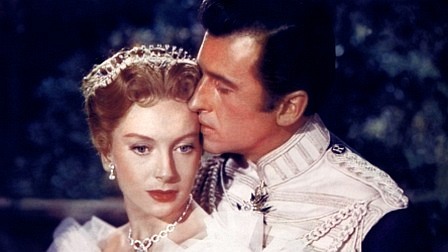
There are plenty of film versions of this story, the earliest dating back to 1911. The two most recent films include the 1990 version starring Polly Walker as Lorna, Clive Owen as John, and Sean Bean as Carver Doone.


The other is the 2000 version starring Amelia Warner as Lorna, Richard Coyle as John, and Aidan Gillen as Carver Doone. This film was very enjoyable. The plot is somewhat streamlined allowing for a bit more romance and less history. Most of the plot is kept intact and the actors do justice to their roles, especially Aidan Gillen who plays Carver. He brings an obsession to the role that is at once disturbing and attractive. If you like BBC productions of classic novels, you'll like this one.

Thursday, December 24, 2009


"There are many things from which I might have derived good, by which I have not profited, I dare say," returned the nephew. "Christmas among the rest. But I am sure I have always thought of Christmastime, when it has come round-apart from the veneration due to its sacred name and origin, if anything belonging to it can be apart from that-as a good time; a kind, forgiving, charitable, pleasant time; the only time I know of, in the long calendar of the year, when men and women seem by one consent to open their shut-up hearts freely, and to think of people below them as if they really were fellow-passengers to the grave, and not another race of creatures bound on other journeys. And therefore, uncle, though it has never put a scrap of gold or silver in my pocket, I believe that it has done me good, and will do me good; and I say, God bless it!" - from A Christmas Carol by Charles Dickens

May You and Yours Have a Blessed and Merry Christmas!

Wednesday, December 16, 2009

Villette

No mockery in this world ever sounds to me so hollow as that of being told to cultivate happiness. What does such advice mean? Happiness is not a potato.

Happiness is not something that Lucy Snowe knows too much about. Her life has been a series of misfortunes with peaceful moments that are few and far between. As she fights her way through life's many trials, she learns that though there are periods of pleasure, you can't expect them to last, and that the only way to survive is to trust in herself.

The Plot:

The novel opens with young Lucy Snowe staying with her relatives, Mrs. Bretton and her son Graham, and a young visitor named Paulina Home, and Lucy observes as a peculiar relationship grows between the dashing Graham and the sweet Paulina. As years pass, Lucy finds herself in need of employment, so at 23, she travels to the fictional country of Labassecour (modeled after Belgium) and secures a position as an English governess in a school for girls.

In Labassecour, she is caught in a whirl of many different people who each affect her life in a different way. There is the handsome, English Dr. John, the flighty and coquettish Ginevra Fanshawe, the dour and spying Mme. Beck, and the fiery and passionate literature professor M. Paul Emmanuel. In this foreign land, Lucy is often forced to defend herself as a Briton, a Protestant, and a woman, and as she begins to grow closer and closer to M. Paul, fate seems to have other plans regarding her future.

My Review (Caution-Spoilers):

It's almost impossible to write a review of this story without doing a little comparison to it's more popular sibling, Jane Eyre. Many readers (myself included) only make it around to this novel once they have fallen for Charlotte Bronte's first novel. But, if you approach this book solely seeking a revamping of Jane Eyre, you will be dissappointed. Though there are a few similarities, Villette differes greatly from Jane Eyre on the whole. It is these differences, however, that cause Villette to shine and confirm Bronte as one of the greatest Victorian novelists.

The biggest difference is in Lucy Snowe herself. Yes. she does resemble Jane Eyre to the extent that she is a deeply passionate person who tends to hide behind a cool exterior. But while Jane treats the reader as a confidant, Lucy does not. She hides her true feelings from everyone, including us. We are forced to guess and surmise that she has romantic feelings for Dr. John(who is actually Graham Bretton, but she doesn't bother to tell us that until much later). All in all, instead of being drawn into the story until we feel like we are standing in the room (ala JE), we are held at arms length and are forced to peer into the windows. Not that this is bad, it just gives Villette a very different feeling from Jane Eyre.

I have read many differing opinions on who was the better match for Lucy: Dr. John or M. Paul. You couldn't find two men more different from each other, Dr. John being noble and tender and M. Paul being friendly yet rather demanding. But while Dr. John is a nice guy, he just doesn't "get" Lucy. He doesn't recognize her as his relative until she points it out, and constantly tries to draw her out into society when that is not exactly what she wants (which kind of reminds me of Mr. Rochester wanting to shower Jane with jewels). M. Paul on the other hand understands her completely. From the moment he meets her, he sees through her frosty exterior to her passionate soul. I love how everyone else says that Lucy should brighten up her wardrobe, but when she wears a gown of the lightest pink, M. Paul is horrified (her passion is coming out!). But M. Paul is not perfect either: he is kind when she is obviously beneath him in learning, but gets angry when her intelligence allows her to catch up with him; he forbids her from looking at a painting because she is an unmarried woman; and he loses his temper over the most insignificant things.

But even more than the men of the novel, readers differ vastly over it's ending. The ending is rather ambiguous, though you couldn't really expect anything different from Lucy Snowe. Bronte leaves room for those who want to imagine a sunshine ending for Lucy and M. Paul, but she also strongly hints that M. Paul is lost at sea. I tend to believe more along the lines of the latter. It seems to me (though I can't believe that I'm saying this) that the ending is stronger and more satisfying without the conventional happy ending. Yes, we grieve over the loss of M. Paul, but at the same time, that view seems to back up everything that Bronte says throughout the rest of the novel. Life is not sunshine and roses, and we will all face heartache, despair, and loneliness (some more than others). It is only the strong in spirit who will rise above it all and make a life for themselves amid the ruins. And that is exactly what Lucy does time and again. By the end of the story, all those who had tried to oppress her and drag her down are gone and she remains the victor in the struggle for her life.

There are so many other aspects of this novel that I would love to discuss. Bronte's autobiographical elements sprinkled throughout the story, the imagry of the nun who haunts Lucy, the Catholicism vs. Protestantism, Lucy's mental instability, I could go on and on. Suffice it to say that I now understand why scholars prefer to spend more time on Villette than on Jane Eyre. While the latter will always be my favorite Bronte novel, I can't help but feel that Villette deserves to be read, debated, and enjoyed just as much. This is a must read for any lover of Bronte or Victorian literature.

Thursday, December 10, 2009

Christmas Short Stories

We've all got our favorite Christmas books. You know, the ones that we read year after year while we curl up in front of the fire or by the Christmas tree. I've got plenty of old favorites that I pick up each holiday season and relish (A Christmas Carol is by far my favorite). But I also love to discover new classics that reflect the joy, the warmth, and the occasional bitter-sweetness of this season. Last year, I discovered Dylan Thomas' lyrical A Child's Christmas in Wales. This year, I was introduced to a little boy called Buddy and a wonderful old lady named Ms. Sook. Truman Capote's three classic holiday stories (all based on his own childhood) are at once funny and heartbreaking, simple and inspired, magical and real. Here is a short summary of each story:

A Christmas Memory:

A young boy is growing up in rural Alabama during the Great Depression. He lives with his unmarried great aunts and uncle all of whom basically ignore him except for one: Ms. Sook. Though in her sixties, Ms. Sook is almost like a child herself. She calls the boy Buddy after a childhood friend who died very young. The two are inseparable and each Christmas is filled with its own unique traditions that draw them even closer. Like making fruitcakes from people as varied as the local peddler to the President of the United States. Or taking one too many sips of the leftover whisky used in making said fruitcakes. Or giving each other a homemade kite every year. As a grown up Buddy reflects on those Christmases gone by, it causes you to reflect on your own childhood with that bittersweet feeling that is nostalgia.

One Christmas:

Buddy is invited to spend Christmas with his estranged father in New Orleans. It does not turn out to be as much fun as Buddy had imagined and living with his father is like living with a stranger. But as his trip comes to a close, Buddy recognizes the emptiness that is heating at his father, and gives him the one gift that will last with his father for all time. Though this was the shortest of the stories, it was by far my favorite. Capote so beautifully captures the inner desire that drives every human on the planet: the desire to be loved.

The Thanksgiving Visitor:

Buddy is horrified when Ms. Sook invites the school bully over for Thanksgiving dinner. What could be worse than to have your biggest enemy in your house during the holidays. Buddy decides to seek revenge on his tormentor as soon as possible. But when fate offers him the chance to do just that, Buddy finds that revenge is not as sweet as it seems.

This was a wonderful introduction to the works of Truman Capote and it has definitely placed more of his works on my TBR list. The writing is incredible and the characters are wonderful. I especially liked the simple yet loving Ms. Sook who brings a warmth and magic of her own to the holidays. So, if you haven't read these lovely stories, grab your coco and your blanket and snuggle up next to the Christmas tree. The beauty is about to unfold!

Wednesday, December 2, 2009

Masterpiece Classic: 2010 Edition

Finally! The good folks over at Masterpiece Theatre have released the 2010 schedule for Masterpiece Classic. This season seems to be a blending of old and new with many of the dramas being set around WWI and WWII. Again, we are given a heaping dose of Jane Austen with 1 new production and 2 encore presentations (and between you and me, I think that we have had enough Jane Austen to last us a couple of decades or so). But what I am most looking forward to is a Return to Cranford. Here is the complete schedule:

Cranford: Dec. 20-Jan. 3. The season kicks off with an encore presentation of Cranford. Set in a small English village on the cusp of change, Cranford stars many notable British actors including Eileen Atkins, Imelda Staunton, Judi Dench, and Michael Gambon. If you haven't seen this one yet, take advantage of this opportunity.

Return to Cranford: Jan. 10-Jan. 17. Old friends reunite in this sequel to the original Cranford. New faces arrive as well including Jonathan Pryce and Tim Curry.

Emma: Jan. 24-Feb. 7. Jane Austen's classic story of matchmaking gets a do-over with many faces that you should recognize from othe Masterpiece productions. Romola Garai is Emma, Johnny Lee Miller is Mr. Knightly, and Michael Gambon is Mr. Woodhouse.

Northanger Abbey: Feb. 14. Encore presentation of Jane Austen's first complete novel. Stars Felicity Jones as Catherine Morland and JJ Field as Henry Tilney. My sister is swooning already.

Persuasion: Feb. 21. Encore presentation of Jane Austen's last complete novel. Stars Golden Globe winner Sally Hawkins as Anne Elliot and Rupert Penry-Jones as Capt. Wentworth.

The 39 Steps: Feb. 28. Agent Richard Hanney must battle German spies on the eve of WWI. Let's see how it compares to the Hitchcock version. Stars Rupert Penry-Jones.

Sharpe's Challange & Sharpe's Peril: March 28-April 4. Based on the novels of Bernard Cornwell, soldier/adventurer Richard Sharpe heads to India to quiet a rebellion. Stars Sean Bean.

The Diary of Anne Frank: April 11. The true story of a young woman whose life and death became a symbol of the tragedy of the Holocaust. Stars newcomer Ellie Kendrick.

Small Island: April 18-25. The season concludes with the story of a young Jamaican woman whose move to gritty post-war London proves to be less than she had imagined. Stars Naomie Harries, Ruth Wilson (Jane Eyre!!), and Benedict Cumberbatch.

Looks like this season will be quite a mixed bag with a little something for everyone. Also looks like they weren't kidding when they said that the "bonnet dramas" would be fading for a time. As we enter the second decade of the 21st century, we will be treated to classics that reflect many different times gone by. Here's hoping for a great season!

Saturday, November 21, 2009

Captain Blood

"Peter Blood, bachelor of medicine and several other things besides, smoked a pipe and tended the geraniums boxed on the sill of his window above Water Lane in the town of Bridgewater."

When we are first introduced to Peter Blood, he seems to be the last kind of man who would be destined to have some of the most fantastic adventures. But that is exactly where fate is leading him. He is about to be whisked away from his quiet life into a life of slavery, of piracy, and of romance.

Rafael Sabatini's 1922 classic Captain Blood made him an overnight success, and continues to delight young and old with the story of a man falsely accused who finds both freedom and revenge on the high seas.

The Plot:

After years of soldiering in Europe, Peter Blood has retired to quieter life as a small town doctor. Though he no longer concerns himself with politics, the times he is living do not allow for much neutrality. After the failure of the Monmouth Rebellion, Blood is accused of aiding a rebel and is sold into slavery in the West Indies along with many others. He is purchased by Colonel Bishop, a ruthless man who treats all of his slaves horribly. Because of his skill as a physician, Blood enjoys a slightly higher standard of living, including a budding relationship with Colonel Bishop's niece, Arabella.

During a raid on the island, Blood and many of the other rebels/slaves escape, but having nowhere to go, find safety and freedom in piracy. It is not long before Captain Blood is the most famous pirate in the Atlantic, becoming extremely wealthy off the booty of French, Spanish, and English ships. And though he is a pirate, Captain Blood is also a gentleman who treats his men and his victims gently and fairly. But there are many men who would like to see him swing from the yardarm (including Colonel Bishop and a Spanish Admiral) and he begins to realize that all the glory and wealth of piracy are nothing compared to a home and a love.

My Review (Caution-Spoiler):

There are few things that I like better than a swashbuckling adventure. And that is exactly what this story is. From beginning to end, Captain Blood is thrown into one hair-raising escapade after another, and we are along for every second of that thrilling ride.

The best part of this story is Captain Blood himself. As a character he is so vivid that he seems to leap right off of the page. He is dashing, vain, brave, handsome, intelligent, and extremely witty. All in all, he ranks right up there with Alan Breck Stewart of Kidnapped when it comes to unforgettable characters. In fact, Captain Blood is so vivid that other characters (hero and villain) tend to pale in comparison.

The writing itself is pretty quick-paced, with many wonderful moments in it. The relationship between Captain Blood and Arabella Bishop is an interesting one. It is a romance, but if you are looking for a romantic novel, this isn't it. The focus here is on the sword fights, the nautical battles and the ever changing politics of the time.

I really can't do justice to how great this book really is. So many fantastic scenes pop into my head every time I think about the novel, like when Colonel Bishop is forced to swim back to shore from his own ship, or when Don Diego is strapped to the mouth of a cannon, or when Colonel Bishop is introduced to the new Governor of Jamaica. This book is for fans of Robert Louis Stevenson or anyone else who enjoys adventure, pirates, and dashing leading men. Absolutely something that Everyone Must Read Before They Die!

The Movie:

Though you could say that movies such as Pirates of the Caribbean take many cues from Captain Blood (and they do), there is only one movie version of this classic novel so far.

That is the 1935 version starring Errol Flynn and Olivia de Havilland. It follows the plot most of the time, though it is probably a bit more "romantic" the the novel. If anyone can get the swashbuckling side of Captain Blood, it's Errol Flynn. A fun, exciting, classic film that deserves to be watched. Check it out!

Trivia: Both Flynn and de Havilland were unknowns in Hollywood until Captain Blood made stars out of them. They would go on to be one of Hollywood's leading screen couples, making 8 films together.

Sunday, November 15, 2009

Weekly Geeks 2009-42: Podcasts for Book Lovers

...share with us a podcast you love, preferably book related, but not necessarily so. Give us the link, of course, and share with us details about that podcast and why you enjoy it so much. If you have a couple or three favorites, share them all!

Then, as the week goes on, check out every one's suggestions, find time to listen to a few, then come back and let us know what you discovered, and if you've found a new favorite podcast.

I don't have many podcasts that I listen to. In fact, I only have one. But, it is definitely a good one. The Classic Tales is a podcast by B. J. Harrison. In each weekly episode, B. J. reads a short story by a classic author. The range from the well known like F. Scott Fitzgerald, Sir Arthur Conan Doyle, and Nathaniel Hawthorne to lesser known authors like Guy de Maupassant, H. P. Lovecraft, and H. Rider Haggard.

There are a lot of things that I love about this podcast. First off, B. J.'s reading voice is great. Not only is his style stimulating, but he is also great at character voices and accents. I love how he really gets into each individual character. His passion for the stories really shines through in every episode.

Secondly, B. J. takes the time to engage with his listeners. He sends out newsletters that give lots of background information on each story, and he also has a message board where listeners can discuss the various stories as well as request some of their favorites.

Finally, it's free. F-R-E-E. FREE! Like the majority of people, I'm not made of money. So it's always nice when you can find an enjoyable pastime that costs nothing.

Right now, B. J. has just wrapped up "Classic Monsters Month" with "Olalla" by Robert Louis Stevenson. Here are some other highlights from the past:
  • Frankenstein by Mary Shelley
  • The Kiss by Anton Chekhov
  • Legeia by Edgar Allan Poe
  • Rikki-Tikki-Tavi by Rudyard Kipling
  • Jeeves and the Unbidden Guest by P. G. Wodehouse
  • A Christmas Carol by Charles Dickens
  • The Speckled Band by Sir Arthur Conan Doyle
And though I haven't yet listened to this, B. J. also has a Classic Novels podcast where he reads full length (complete and unabridged!) novels. So far these novel include Great Expectations by Charles Dickens, Captain Blood by Rafael Sabatini, and The Moonstone by Wilkie Collins. These do have to be purchased, but they are priced really well. By the end of each story, you have a full length audiobook for about half the cost.

Another one that I have thought about subscribing to is Penguin Classics On Air. Here, the publishers of thousands of classic novels along with experts in the literature field, discuss various works of literature and their impact on today's society. So far they have discussed why we still love Jane Austen, the Swedish Gone With the Wind, and why vampires have endured in the world of literature.

I hope that this has sparked some interest in you. Please share any other classic lit podcasts that you might know of.