Showing posts with label Children's Literature. Show all posts

Tuesday, September 23, 2014

Books That Made Me...

If you have been on Facebook recently,  you have probably seen the "10 Books That Have Stayed With You" meme.  Participants have listed 10 books that continue to impact them and then challenge friends to do the same.  Author Roxane Gay took it one step further with this post entitled "The Books That Made Me Who I Am".  In it she states:  "I could not limit a list of important books to a number or a neatly organized list. The list, whatever it might look like, would always be changing because I too am always changing. I am not influenced by books. Instead, I am shaped by them. I am made of flesh and bone and blood. I am also made of books." 

It got me to thinking about, not my "favorite" books, not books that have "stayed with me", but the books that have transformed me as a person and that influenced me in different ways throughout my life.

My inquisitiveness must stem from my early love of mystery novels.  My mind goes back to the moments spent curled up on the couch as my mom read me the Alfred Hitchcock and the Three Investigators Series.  I was caught up in the mystery and the knowledge that you could solve the problem if you were observant.  As I grew, this was only encouraged by the Sherlock Holmes stories.

My love of the magic and beauty of childhood and home certainly comes from classics like The Wind in the Willows, Winnie the Pooh, and Paddington Bear.  Even now, reading them brings me a sense of peace, safety, and a love of the simple and funny moments in life.  As I grew, I learned that comfort and safety isn't guaranteed.  But reading The Chronicles of Narnia gave me courage and helped me realize that though God may not always seem close, He is there and has equipped me to face every battle.

My idea of friendship was influenced by Little Women and the Anne of Green Gables series.  I always envisioned me and my sisters as being an extension of the March family.  We were very close as children and often found our amusement, our encouragement, and our strength within our family circle.  And Anne Shirley taught me that it isn't age, gender, class, or proximity that determines if someone can be your friend.  It is choosing to see beyond what is visible in people and embracing the spirit within them.

The hopeless romantic in me is fed by the likes of the Jane Austen novels, North and South, Rebecca, and classic fairy tales.  I'm a sucker for a romance, and my idea of the perfect man has (for better or worse) certainly been shaped by these stories.

My self-worth, as a person and as a woman, has been influenced by various female characters.  Elnora Comstock from A Girl of the Limberlost taught me that self education can take you as far as any structured classroom.  Marian Halcomb from The Woman in White taught me that strength, love, and intelligence are more important than traditional beauty.  Laura Ingalls from the Little House series taught me to embrace an adventurous spirit and to not let others' ideas of who you should be keep you from living the life you want.

The one book that has had the most influence on me from the very first time I read it was Jane Eyre.  As I have grown and matured, it has become what I needed in each stage of life.  As a teenager, I reveled in the romance between Jane and Rochester.  Now, as an adult, I see in Jane not only the person I am, but also who I want to become.  A passionate person enclosed in a quiet frame.  Someone who feels that she must do the right thing, no matter how much she wishes not to.  Someone who cares about herself and reputation, yet doesn't allow the opinions of others to dictate her life.  Someone who is comfortable in solitude, and yet desires true companionship.  No matter how the rest of my life turns out, I can't help but feel that this book will always be one of my touchstones.

What about you?  What books have shaped your life and the person you have become?  Share with us!           

Wednesday, October 9, 2013

The Little Prince

“People have forgotten this truth," the fox said. "But you mustn’t forget it. You become responsible forever for what you’ve tamed. You’re responsible for your rose.” 

First published in 1943, Antoine de Saint-Exupery's slim novella The Little Prince remains extremely popular throughout the world.  It is the most read and most translated piece of French literature and continues to sell over a million copies each year.  This tale speaks of love, loss, loneliness, and friendship and continues to enchant readers 70 years later.

The Plot:

The narrator of the story is a pilot whose plane has crashed into the Sahara desert, far from civilization.  He must fix his plane before he runs out of supplies and succumbs to the desert heat.  He encounters a young boy who seems to appear from nowhere and whom he refers to as "the little prince".  They strike up a conversation and soon discover that the look at the world in remarkably similar ways.  Over the course of eight days, the little prince recounts his life story to the narrator as he works on his plane.

The prince is from a small asteroid called B-612, where his life consisted of cleaning out tiny volcanoes and pulling up undesirable weeds.  There was also a small rose that had mysteriously appeared on the asteroid.  He cared for it, nurtured it, and protected it from the cold.  But even as he was falling in love with his rose, he felt that she was taking advantage of him and he resolved to travel to other planets to escape her.  As he went from planet to planet, he met several foolish and narrow-minded adults who lived on them.  He then made it to Earth where he encountered various other people/creatures who revealed the state of human life on the planet.  As he recounts his story, his worry and desire for his rose continues to grow, and he must decide whether or not to make the ultimate sacrifice to see her again.

My Review (Caution - Spoilers):

This is another one of those books that was on my radar, but that I knew absolutely nothing about until I actually read it.  And I'm not going to lie, this is a tough book to review because it is almost impossible to pin down.  It is whimsical and illogical, and yet it makes many profound statements about life. 

On it's surface, this novella is one that seems to be meant for children.  It has a sense of magic and a way of story telling that just doesn't seem to make sense (in a pleasant way).  It can be difficult to wrap our adult minds around the almost ethereal tone that the story takes.  And both the narrator and the little prince are characters that children can bot relate to and admire.  It is no wonder that parents all over the world choose to read this book with their family and try to recapture the sense of wonder and enchantment that we all once had.

But at a deeper level, there are a lot of themes and ideas that go above children's heads.  Many of the events and characters in the story are based on de Saint-Exupery's own experiences.  He also explores many other themes throughout the story, most prominently the idea of relationships.  The fox that the little prince meets explains to him that "taming" something, or having a relationship with someone, creates a responsibility that you cannot escape.  That is why, no matter how frustrated he was with the rose, the little prince feels that he must go back and take care of her.  Their relationship created a mutual need.

Again, this is a book that is hard to recommend because it is so hard to pin down.  I think that this is one that adults should definitely read, and use their judgement on how the children in their life would like it.  It is certainly one that deserves being read over and over again as there are so many little gems in it.  Be prepared to have your heart touched, and to never look at the stars the same way again.

The Movies:

This story has been adapted in a variety of forms, but only two have been film adaptations.  One is the 1974 musical version starring Richard Kiley, Steven Warner, Joss Ackland, and Gene Wilder.  It was not very successful when it first came out, but it has gained a bit of a cult following.

There is also a 3D adaptation set to come out next year starring James Franco, Rachel McAdams, Marion Cotillard, and Jeff Brides.         

Wednesday, September 18, 2013

The Wind in the Willows

Home! That was what they meant, those caressing appeals, Those soft touches wafted through the air, those invisible little hands pulling and tugging, all one way. 

At first, the story of four animal friends living along the banks of a tranquil English river existed only in the bedroom of Alistair Grahame.  His father, Kenneth, a secretary for the Bank of England, created them as bedtime stories for his young son.  After he retired from his job, Grahame decided to write these stories down and in 1908, The Wind in the Willows was published.  It soon became a favorite of people all over the world, from President Theodore Roosevelt to future children's author A. A. Milne.  And it remains one of my personal favorites to this day.

The Plot:

With the arrival of spring, Mole is tempted from his spring cleaning out into the world above his hole.  He chances to meet Rat, who introduces Mole to his life along the riverbank.  The two become fast friends and are soon spending their days on the river boating, fishing, picnicking, and exploring.  Other friends soon appear on the scene as well.  There is the reclusive, but kind hearted Badger who makes his home in the dark and dangerous Wild Wood.  There is the cheerful Otter who is there one minute and gone the next.  And there is the over the top, vain, and loveable Toad who lives in his ancestral home of Toad Hall.  As life along the riverbank flows through the seasons, the friends have many adventures and ultimately learn the value of home and friendship.

My Review (Caution - Spoilers):

This book has been a favorite of mine for years.  I first discovered the story by renting a video version from the library when I was very young and it has stayed with me ever since.  It is one of the most beautiful, charming, and sensitive children's books that I have ever read. 

In many ways, this is two books in one.  One part of the book is the fast-paced, rollicking adventure told through Mr. Toad.  He is the only character to take us beyond the peaceful world of the riverbank and into the wide world.  It is non-stop action and Toad is constantly getting himself into big scrapes and then somehow manages to get out of them (usually by chance or the help of someone else, but Toad would have you believe that it was his own smarts).  This aspect is balanced out with an emotional and almost spiritual story line told mostly through Rat and Mole's friendship.  Except when their stories intersect with Toad's, it is a much more tranquil story line that portrays a full range of human emotion like fear, sadness, restlessness, longing, joy, and friendship.  But Grahame also never lets us forget that his characters are animals, and they often display moments of instinct, sight, sound, and smell. 

I think the most prominent aspect of the story, and strangely enough one that I never really noticed until this reading, is the importance of home.  Each character has it's own sense of what home means.  For Mole, it is his cozy, simple hole.  For Badger, it is his vast and hidden home of tunnels.  For Rat, it is hearing the river lap against his windowsill every night.  And for Toad, it is his elegant and manicured Hall.  It gives us the sense that home is defined by the individual and that no matter how much you enjoy spending time somewhere else, it is ultimately never the same as being in your own space.  I think this idea resonates with adults more than children.  We have to go out into the wide world every day, and nothing means as much to us as coming home at the end of it and finding things just the way we like it.

This book is  one of literature's greatest treasures.  No matter how old you are, you will love spending time Grahame's world with it's sense of wonder, peace, order, and nostalgia.  It will continue to be one of my favorites for as long as I live, and one that I greatly anticipate sharing with my own children one day.  

The Movie:

There have been lot's of film and television adaptations of this story.  I am familiar with two of them.  One is the 1983 stop-motion adaptation starring David Jason, Ian Carmichael, and Michael Horndern  The other is the 1995 animated version starring Michel Palin, Alan Bennett, Rik Mayall, and Michael Gambon.  Both of these films do a wonderful job with the story and are great for the whole family.           

Wednesday, September 11, 2013

Peter Pan

“Never say goodbye because goodbye means going away and going away means forgetting.” 

For most of us, the story of Peter Pan is one we become very familiar with at a very young age.  Whether it is through the classic Disney film version or the equally famous Broadway version, we each know the story of the boy who never grew up.  But while we may feel like we know the story, if you have not read the original work, chances are you don't know everything.  Barrie's story is one of childhood and magic, but there is also a sinister side that many modern adaptations leave out.

The Plot:

The Darling family, including children Wendy, John, and Michael, lives in a nice little house in the Bloomsbury neighborhood of London.  One night when Mr. & Mrs. Darling are at a party, a mysterious boy appears in the nursery.  He is revealed to be Peter Pan, a boy who lives in Neverland and refuses to grow up.  He has been secretly visiting the Darling home at night to listen to Mrs. Darling's stories.  He invites Wendy to come to Neverland with him and be mother to him and his gang of "Lost Boys".  She accepts and soon she, John, and Michael have been taught to fly (with the help of the fairy Tinkerbell) and are soaring towards Neverland.

That is only the beginning of the many adventures the children find there.  They encounter mermaids, Indians, and a clock-swallowing crocodile.  But nothing prepares them for their encounter with Peter's greatest enemy, Capt. James Hook and his band of ruthless pirates.  Will the children be able to defeat the thugs and return home, or are they doomed to walk the plank?

My Review (Caution - Spoilers):

I have been familiar with the Peter Pan story all of my life, but I have only now read the book.  It surprised me in many ways, both at how familiar it was and also by how much darker it was to the story I remembered.  

Overall, it is very much the story that you remember.  Barrie's writing is great and the story is one of almost non-stop adventure.  Everything that catches children's imaginations is found here from mermaids and Indians to pirates and crocodiles.  There is also an almost palpable sense of magic throughout the story and Neverland is certainly the center of it.  And Barrie's descriptions only add to the sense of beauty and magic.  "If you shut your eyes and are a lucky one, you may see at times a shapeless pool of lovely pale colours suspended in the darkness; then if you squeeze your eyes tighter, the pool begins to take shape, and the colours become so vivid that with another squeeze they must go on fire.
   
There were some things that surprised me and that will probably surprise many parents who choose to read it to their children.  This isn't the squeaky clean Disney version.  There is a bit of violence, with most of it coming from the children themselves, as well as a romantic aspect that isn't always portrayed in the film versions.  And in describing children as "innocent and heartless", Barrie highlights the cruelty that children posses.  The children lack the sympathy and sense of responsibility that comes with growing up.  Peter completely ignores the needs of "his" Lost Boys and the children don't express any concerns for the feelings of their parents.  This all leads to Barrie's main theme that while childhood has many great qualities, it also has an element of tragedy.

All in all, Peter Pan remains a classic read for all children.  Though there are a few elements that parents may want to discuss with their children, it is still one that I recommend be read to them.  No film version can substitute for the original.

The Film:

There have been many adaptations of this classic story, but three of them stand out for most modern audiences.  The first is the 1953 Disney version starring Bobby Driscoll, Kathryn Beaumont, and Hans Conreid.  This version is pretty faithful to the story (if not the tone) of the original and remains a classic children's film.

There is also the 1960 NBC broadcast of the stage musical starring Mary Martin and Cyril Ritchard.  I was shocked at how close this version followed the original story.  Most of the dialogue is pulled straight from the book.  I loved this version as a child and consider it a must see for all fans of Peter Pan.

The other major adaptation is the 2003 version starring Jeremy Sumpter, Rachel Hurd-Wood, and Jason Isaacs.  I haven't seen this version, but it has received generally positive reviews.          

Saturday, August 24, 2013

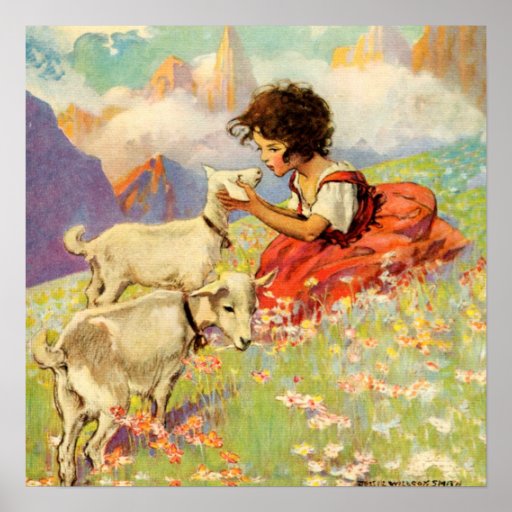
Heidi

God is good to all of us. He knows what we need better than we do. And just because he thinks it is better not to give you what you want right now doesn't mean he isn't answering you. You shall have what you ask for but not until the right time comes.

Most of us are familiar with the story of Heidi.  It is, after all, one of the world's best selling books and perhaps the most well-known works of Swiss literature. Written in 1880 by Johanna Spyri, this classic children's novel speaks of faith, love, the importance of education, and the beauty and freedom of life in the Alps.

The Plot:

After the early death of her parents, Heidi is raised by her aunt Dete until the age of 5.  When Dete accepts a new position, she take Heidi to live with her grandfather who has lived in seclusion high in the Swiss Alps for years.  At first, Heidi's grandfather resents her presence, but she soon wins him over with her innocence and love of life.  She in turn finds peace and happiness playing on the mountainside with Peter, the goatherd, and the goats.

Three years later, Dete returns to take Heidi to Frankfurt to live as a companion to Clara Sesemann, a wealthy girl who has lived as an invalid.  Though Clara takes to Heidi instantly, things don't go as smoothly with other members of the household.  Heidi's country manners and lack of education mortify the housekeeper Fraulein Rottenmeir and cause no end of trouble between them.  Even though Heidi finds comfort in the arrival of Clara's Grandmamma, she still longs to return to her life on the mountain.  As more time passes, it seems like that will never hapen.

My Review (Caution - Spoiler):

This story is one that I have been familiar with my whole life, but I haven't ever taken the time to read the original novel until now.  The book was originally subtitled "for children and those who love children", and I think that is a very apt description.  The simplicity and beauty of the story is enough to warm the heart of anyone who reads it.

I think what really makes this story so beautiful is it's setting.  Having been to Switzerland myself, I know that the beauty described is not exaggerated.  And Spyri's writing makes you want to live on the mountain to.  The fire-like sunsets, the wind whipping through the pine trees, the purity of the air...it is no wonder Heidi and Clara each grow strong and healthy here.  Life on the Alm is one of peace, freedom, hard work, and friendship.

Though the characters and plot of the novel are pretty simple, there are still many themes woven into it that are great for children (and adults) to hear.  The importance of simplicity and faith in life as represented by life on the Alm.  The need for education and human connection as represented by life in Frankfurt and the village.  And, perhaps most important, the belief that everything in life is subject to God's timing. That we are in the situations we are in for God's reasons and that no matter where we find ourselves God will bring good out of it.  Though Heidi's life in Frankfurt does not bring her pleasure, it ultimately gives her a love for learning and makes a way for Clara to get well.

There is a reason that this story is a classic.  It has all of the ingredients to capture the imagination of the young and young at heart.  If you haven't already read this story for yourself or your children, don't put it off any longer.  Though we are all familiar with it, there is no substitute for the real thing.

The Movie:

 There are dozens of adaptations of this classic story and most people have their favorite.  The one I am most familiar with is the 1937 version starring Shirley Temple, Arthur Treacher, and Mary Nash.  It has been a long time since I have seen it, but from what I remember it follows the basic plot with some variations here and there.  Fraulein Rottenmeir is much more of a villain and the Grandfather has to fight hard to get Heidi back.  A classic Shirley Temple film, and a nice adaptation.  

The other popular adaptation is the 1993 TV miniseries starring Noley Thornton, Jason Robards, Jane Seymour, and Patricia Neal.  I haven't seen this one, but it is one of the more well-known adaptations out there.     

Wednesday, August 14, 2013

The Rescuers

Mice are all for people being free, so that they too can be freed form their eternal task of cheering prisoners--so that they can stay snug at home, nibbling the family cheese, instead of sleeping out in damp straw on a diet of stale bread.

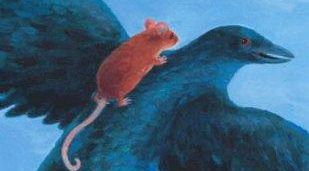
Though many people are familiar with the title The Rescuers due to the popular Disney film, most don't realize that it was based on a children's book series.  Published in 1959, this story by English author Margery Sharp tells the story of three courageous mice and strives to teach children about overcoming fear, doing without for the sake of others, and the importance of friendship and loyalty in accomplishing any task.

The Plot:

The Prisoner's Aid Society is a group of mice whose mission is to bring comfort to prisoners throughout the world.  But a new challenge has arisen that will require more than just the ability to provide comfort.  A Norwegian poet is being held deep in the dungeons of one of Europe's most notorious prisons, and the Prisoner's Aid Society decides that he must be rescued.  They send Bernard (who works in the pantry of an unnamed embassy) to solicit the help of Miss Bianca, the pet mouse of the son of an ambassador.  They want her to travel to Norway to find a mouse who can communicate with the prisoner.

At first, Bernard feels that he cannot ask Miss Bianca to embark on so dangerous a mission.  She just seems too delicate and pampered to become involved in something like that.  But though Miss Bianca is definitely on the pampered side, she decides to set all of her fear and selfishness aside to help the poor poet.  So begins an incredible journey for the mice as they learn to trust each other and overcome their fear to bring relief and freedom to a suffering man. 

My Review (Caution - Spoilers):

Like most people, I had no idea that the Disney film The Rescuers was based on an actual book series.  It turns out that the film is actually based on the 2nd book in the series, so don't be looking for too many plot similarities in this book.

This is one of those books that isn't all that bad, it just doesn't reach the heights of "classic" literature.  The story and characters are very simple and straightforward.  This makes a perfect little read for your kids, it just doesn't capture the adult imagination like other children's classics do.  As an adult, you would want to know more about the poet's background, why he was in prison, and what this said about Cold War society.  But kids will simply identify with the mice and only really care about their story.  Sharp understands this and the story is definitely geared towards them.

But though the plot is simple, the overall themes are very important for children to hear.  In Bernard, they gain an understanding of what it means to look out for those weaker than you and to not let personal feelings get in the way of your task.  In Miss Bianca, they learn that sometimes you have to go through uncomfortable situations in order to do what is right and that loyalty to friends and family is very important.  

Again, this is a very simple story that is perfect for younger children to have read to them.  Adults shouldn't expect too much from it, but it is definitely one I would recommend as bedtime reading.  The pace is good, the characters easy for kids to sympathize with, and the lessons are important ones for kids to learn.  A sweet story overall that deserves a bit more attention than it normally receives.

The Movie:

Of course the film version is the 1977 Disney adaptation.  It stars Bob Newhart and Eva Gabor as Bernard and Bianca.  Again, plotwise it has more to do with the 2nd book in the series (Miss Bianca) but it is still well done (and well loved) film.        

Wednesday, July 31, 2013

The Invention of Hugo Cabret

“I like to imagine that the world is one big machine. You know, machines never have any extra parts. They have the exact number and type of parts they need. So I figure if the entire world is a big machine, I have to be here for some reason. And that means you have to be here for some reason, too.” 

Trying to categorize Brian Selznick's 2007 children's book is pretty difficult.  The author himself described it as "not exactly a novel, not quite a picture book, not really a graphic novel, or a flip book or a movie, but a combination of all these things".  Indeed, with 284 out of its 533 pages being pictures, even the literary community has not been able to fully decide where to shelve this one.  It won the 2008 Caldecott Medal as a novel, even though the award is traditionally reserved for picture books.  The one thing that those who have read it can agree on is that it is a very unique book full of a fantastical and magical qualities that will delight readers both young and old.

The Plot:

It is 1931 and twelve year old Hugo Cabret is living in the walls of the Montparnasse train station in Paris.  After being orphaned by the tragic death of his father, Hugo was taken in by a drunken uncle who trained him to help keep the train station clocks running smoothly.  Hugo continues this after his uncle's death in order to keep from being taken to an orphanage.

Hugo's main obsession in life is to finish fixing an automaton that his father had discovered in the attic of a museum.  He is convinced that his father has left him a message in the automaton and the only way to discover it is to fix the machine.  His need for parts brings him into contact with Papa Georges, a grouchy old man who runs the station toy store, and his spunky goddaughter, Isabelle.  As the story progresses, Hugo and Isabelle discover that there are secrets that Papa Georges is keeping and that the automaton seems to be the key to both their past and their future.   

My Review (Caution - Spoilers):

I became aware of this book after seeing Martin Scorsese's Academy Award winning film Hugo.  I loved that film (more on it later) and was determined to read the original source.  It is such a unique book that I am sure I will have some difficulty in reviewing it, but here it goes anyway.

I was a little afraid when I saw that about half of the novel's pages were devoted to pictures.  I couldn't help but feel that this would in some way slow the story down.  But Selznick's masterful artwork actually did the opposite.  Each picture contained enough information that additional words were unnecessary and the pace remained quick and smooth.  They also added to the magical quality of the story, especially the stills from Georges Melies' films.  I also enjoyed each of the characters in the story.  Hugo is full of ambition and yet his loneliness and insecurities help you sympathize with him.  Isabelle is smart, compassionate, and brave...qualities that we all like to see in ourselves and our daughters.  And one can't help but love Papa Georges whose grumpiness is covering a large amount of pain and regret.

As an adult, what I enjoyed most were the real life historical aspects of the novel.  I had no previous knowledge of the works of Georges Melies and I found myself fascinated by his story.  He was a popular filmmaker at the turn of the 20th century, and he used his background in magic to create seemingly impossible special affects for his films.  Most of them have a fantastical, almost dreamlike quality to them and Selznick especially highlights his famous "A Trip to the Moon".  Anyone who has even a basic interest in the history of film will appreciate this part of the story.

Though this isn't a perfect novel (I did find the ending to be somewhat anticlimactic, and some children may find the plot dull), it is certainly a fascinating one.  It is so different from almost anything else you will read, and it has a beautiful and magical quality that will stay with you for a long time.  It is completely worth your family's time.   

The Movie:

As I said before, I was drawn to this book by the 2011 film adaptation.  It stars Asa Butterfield as Hugo, Chloe Grace Moretz as Isabelle, Ben Kingsley as Papa Georges, and Sacha Baron Cohen as the Station Inspector.  In many ways, this film brings out the truly fantastical qualities of the story that the page just can't.  The special effects of the film really reflect the magic of Melies' films and you actually get to see clips from them as they were meant to be seen, not just as stills.  In many ways, I feel that a story centered on an early filmmaker is best told through that medium.  

Besides the effects and cinematography, the acting was also top notch.  I thought that Asa Butterfield especially did a wonderful job with the character of Hugo (you may remember him from his touching work in "The Boy in the Striped Pajamas").  He was able to portray an almost wise-beyond-his-years boy who still retained an air of innocence and vulnerability.

I really hate that this film did not perform as well at the box office as it should have.  It is a truly beautiful film that should be enjoyed along with the book.  I would definitely put it on the list for your next family movie night.                

Wednesday, May 15, 2013

Summer Reading: Children's Classics

Over the last few years, I've given myself a summer reading challenge, using the time between Memorial Day and Labor Day to read a collection of books based on a certain theme.  So far these have included The Lord of the Rings, Southern classics, German literature, world literature, and detective fiction.  This year, I have decided to read some classics of children's literature.  I've always had an affinity for well written children's books, and the best ones will delight readers of any age.  Here are the ones I have selected for this year:

  • The Invention of Hugo Cabret by Brian Selznick.  This modern classic was turned into the Oscar nominated film Hugo, which I really enjoyed.  It tells the story of Hugo Cabret, a young orphan secretly living in a Paris train station in the 1930's.  While working on an automaton that his inventor father left him (and which he is sure contains a secret message), Hugo becomes involved with a toy shop owner (Papa Georges) and his granddaughter Isabelle.  It soon becomes apparent that Hugo's automaton has a connection to Papa Georges secret past.
  •  The Rescuers by Margery Sharp.  This is the first in a series of popular children's stories by English author Margery Sharp.  It is about a mouse named Miss Bianca and her involvement with the Prisoner's Aid Society of Mice.  This book would go on to be the basis for the Disney films The Rescuers and The Rescuers Down Under.    
  • Heidi by Johanna Spyri.  This story is one of the best known children's classics and also one of the most famous works of Swiss literature.  Young Heidi is orphaned and sent to live with her grandfather on a farm in the Swiss Alps.  Though he is initially cold towards the girl, she eventually softens his heart and they lead a contented life.  Heidi is then sent to gain an education as a companion to a wealthy girl named Clara.  Though Heidi is surrounded by wealth, she longs to return to the mountains and her grandfather.
  •  Peter Pan by J. M. Barrie.  This classic tale of the boy who wouldn't grow up has delighted readers for over a century.  After meeting this strange boy during his nighttime visit to their London house, Wendy, John, and Michael Darling embark on a magical adventure to Neverland.  Here they meet the fairy Tinker Bell, the Indian princess Tiger Lily, the gang of Lost Boys, and the infamous Captain Hook.
  • The Wind in the Willows by Kenneth Graham.  This one is a re-read for me, but I love it so much that I really wanted to be able to properly review it.  This book relates the adventures of four forest friends, Rat, Mole, Toad, an Badger.  Their various escapades range from the simple, to the fantastic, to the supernatural and each shows the loveliness of pastoral England.
  •  The Little Prince by Antoine De Saint-Expurey.  This novella is the most read and the most translated work of French literature.  After crashing his plane in the Sahara desert, the narrator comes into contact with a young boy he dubs "The Little Prince".  As the narrator tries to fix his plane, the Prince recounts the story of his life.
I am very excited about reading these classic stories.  Have you read any of them?  If so, please let me know what your impression was.  And feel free to let us know what your own summer reading plans are.

Saturday, April 6, 2013

The baby has known the dragon intimately ever since he had an imagination. What the fairy tale provides for him is a St. George to kill the dragon. Exactly what the fairy tale does is this: it accustoms him for a series of clear pictures to the idea that these limitless terrors had a limit, that these shapeless enemies have enemies in the knights of God, that there is something in the universe more mystical than darkness, and stronger than strong fear.  - G. K. Chesterton

Wednesday, June 20, 2012

War Horse

"Does he not personify all that men try to be and never can be? I tell you, my friend, there’s divinity in a horse, and specially in a horse like this. God got it right the day he created them. And to find a horse like this in the middle of this filthy abomination of a war, is for me like finding a butterfly on a dung heap. We don’t belong in the same universe as a creature like this.” 

In WWI, the British Empire mobilized 8.9 million men to send over to France.  Over 900,000 would never return.  What a lot of people do not know, is that Britain also mobilized a million horses for the front, and only 62,000 would live to see the end of the war.  Many died from exhaustion and overwork, but some fell on the battlefield, taken down by machine guns and barbed wire.  In his 1982 novel, Michael Morpurgo shows us the horrors of the first world war through the eyes of one of these magnificent creatures who gave their all in a fight that was not theirs.

The Plot:

This story is told through the eyes of Joey, a young thoroughbred in Devon, England.  He is separated from his mother at a young age and sold to an alcoholic farmer.  The farmer's young son, Albert, takes a shine to the colt and soon they are the best of friends.  Albert rides Joey daily and trains him up not just as a good mount, but also for farm work as his father wishes.  At the outbreak of World War I, the British cavalry is in need horses and Albert's father decides to sell Joey to help pay off some debts.  Though Albert is unable to stop the sale, he promises Joey that they will be together again one day.

Joey is then taken over to France as the mount for Capt. Nicholls, a kind young cavalryman who has promised to care for him.  When Capt. Nicholls is killed in battle, Joey is soon caught up in the war, seeing it from all sides as he continuously changes hands.  As Joey faces horror after horror both on and off the battlefield, he wonders if he will ever be safe again.

My Review (Caution-Spoilers):

Like most people, I became aware of this story after having seen the fantastic play version.  It is a short novel that is meant for children, so it is not overly complicated.  It is however, a touching story and an eye opener into the true cost of war.

What is great about this novel is that everything is seen through Joey's eyes.  In many ways, I feel that our society has become desensitized to the human toll of war.  We've read the novels, seen the movies, and watched the news reports and in some ways none of it seems to truly move us anymore.  Most of us are still suckers for animals though, and seeing the horror that these animals went through certainly touches our hearts.  Those of us who can sit dry-eyed through one war movie may find ourselves crying over the death of Topthorn.  The use of horses as the main characters ironically brings the human element back to the story and opens up our feelings for all of those who suffer during war.

The other great thing about seeing the war through Joey's eyes is that there are no good sides and bad sides.  Joey changes hands constantly during the war and he experiences kindness and hatred on both sides.  Morpugo never uses a person's uniform to define their character.  Instead, we judge them only by their treatment of the horses and in this we see that it is not one's nationality or political stance that makes one good or bad, but rather it is how well we live with those around us.  One of my favorite parts of the stories was when Joey was living with the young French girl Emilie and her grandfather.  Her sweetness and kindness in the face of all of her struggles was inspiring in and of itself.

If you are looking for a novel to help introduce your children to the realities of war, this is a good one.  It is a touching look at human interaction and a fitting tribute to the animals whose lives were lost in serving mankind.  

The Movie:

There are two ways to see Joey and Albert's story brought to life.  The first is the award winning stage adaptation.  I was lucky enough to see this in London and it is a great production.  The hand puppets used to create the horses were phenomenal and by the end of the show you have forgotten that they are not real.  The story is wonderfully acted and the music is hauntingly beautiful.  The play is now being performed in many cities around the world, so be sure to see it if you get the chance.

The second is the 2011 film adaptation directed by Steven Spielberg and starring Jeremy Irvine, Emily Watson, Tom Hiddleston, and Benedict Cumberbatch.  Though to me it wasn't as good as the stage play, it is still a decent adaptation, beautifully shot in Dartmoor, Devon.  Definitely worth seeing.      

Monday, April 2, 2012

International Children's Book Day

oday is International Children's Book Day. To celebrate, I'm highlighting some of the books that have played a prominent role in my siblings and my childhood.


The Boxcar Children series by Gertrude Chandler Warner

This series was a great favorite of mine when I was young, and now my seven year old sister has fallen in love with them as well. You just can't resist these classic adventures of the Alden children who live with their kind grandfather and solve all kinds of mysteries.


The Adventures of Tintin series by Herge

Though my 10 year old brother is not the biggest reader in our family, he simply can't get enough of these stories. Created by Belgian author Herge, these comic books relate the adventures of a spunky young reporter and his sidekicks Snowy (the dog) and Capt. Haddock. From the Congo to China to Tibet, Tintin is never far from excitement. The recent Speilberg/Jackson film is now bringing this popular European series to a North American audience.


Hank the Cowdog series by John R. Erickson

This was (and still is) a great favorite of my 18 year old sister's. Hank the Cowdog is head of ranch security on High Loper's Texas ranch, and he take's his job seriously. If only things didn't keep happening to mess things up. For a fun family read, nothing beats these hilarious stories.


The Legend of the Indian Paintbrush by Tomie dePaola

From the time she was small, my (now 20 year old) sister was a huge fan of Tomie dePaola's work. She loved to look at his illustrations of various books. Her most favorite of his works was his Legend of the Indian Paintbrush which was part of his collection of legends, fables, and folktales from around the world. In this story, a young Indian brave struggles to fulfill his dream-vision of painting the sunset.


The Chronicles of Narnia by C. S. Lewis

There are few people who are not touched by this series at some point in their childhood and my other 20 year old sister is no exception. Lewis' beautiful stories are not only a wonderful example of fantasy literature, but they are also a beautiful picture of the Christian story. My sister's favorite novel from the series is The Magician's Nephew.


The Wind in the Willows by Kenneth Graham

I've read many classics of children's literature in my time, but few have stuck with me the way this one has. Kenneth Graham's enchanting and beautiful tale of life on the river continues to haunt me to this day. I love thinking about Rat "messing about in boats", Mole doing his spring cleaning, gruff Badger in his hole in the woods, and Toad careening through the village in his motorcar. This is a story that, in my opinion, should be read to every child. A gem of a book if ever there was one.

How about you? Do you have a favorite book from your childhood? Is there one that you discovered by reading to your own children? Please share and take the time to celebrate the role books play in the life of a child.

Friday, March 9, 2012

Very Scary Fairy Tales

Many of the world's most beloved fairy tales have been around for centuries. Millions of children were raised on stories filled with wolves, witches, giants, and death. But according to a new study completed by a British television channel, more and more parents are choosing to skip these stories at bedtime.

The Daily Mail reports that some of the books most commonly left on the shelves include Rumpelstiltskin and Rapunzel because kidnapping is the centerpiece of their storylines. And, Little Red Riding Hood -- that Big Bad Wolf is too gruesome when he gobbles up Red's grandma. A staggering one-third of parents reported that their children were actually brought to tears by the scene.

Having personally read the Complete Grimm's Fairy Tales, I can attest to the fact that the true versions of these stories are hardly the innocent, safe bedtime tales that Disney makes them out to be. However, I can't help but wonder if taking fairy tales completely out of our children's lives is the best answer. First off, the stories found in the Brother's Grimm really are a part of the foundation of Western literature and culture. The stories are so ingrained in us and our literature that I can't imagine removing them. Also, should it really be our goal to completely remove violence from our children's lives? Maybe it would be better to take the time to explain these stories to them rather than removing them completely.

What do you think? Will you read these stories to your children? Or is it time for us to put Cinderella, Hansel and Gretel, Little Red Riding Hood, and Rumplestiltskin on the adult shelf?

Wednesday, February 22, 2012

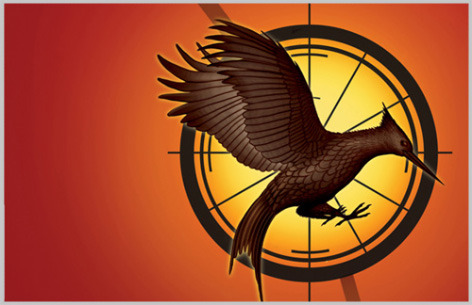
Mockingjay

“Fire is catching! And if we burn, you burn with us!”

The subject of war is not new to the sphere of literature. It has been portrayed in everything from sweeping epics like War and Peace to heart-wrenching sagas like All Quiet on the Western Front. But the vast majority of "great war novels" are strictly in the adult genre. Peruse the aisles of children's and YA literature and you'll find novels of good vs. evil, novels of children affected by war, and novels that glorify battle. What you won't find are novels that show war for what it really is: complicated and morally ambiguous. The final installment in Suzanne Collins' Hunger Games trilogy fills this gap and takes its young protagonist to the very brink of destruction.

The Plot:

It is all out war in Panem. Katniss Everdeen has been rescued from the Quarter Quell arena only to find out that her home of District 12 has been wiped out by the Capitol. The few survivors including Gale, Prim, and Katniss' mother who do escape find refuge in District 13, once thought to have been defeated by the Capitol but which survived by moving underground. District 13 is now leading the revolt against the Capitol, possessing the weapons, the technology, and everything they need to get the job done. Everything that is except a symbol. Whether she likes it or not, Katniss has become the symbol of defiance to the people of Panem, and the rebels want her to help them by taping propaganda messages to go out across the country. After much deliberation, Katniss decides to become the "Mockingjay".

But things are not as cut and dry as she originally thought. She is under full control of District 13's President Coin with little to no say in the actual battle plans. Her overwhelming desire for revenge and freedom soon meet up with the reality that is war. She is faced with the mass killing of innocent people, battles with ordinary citizens of Panem, and the loss of comrades in arms. On top of that, Peeta is being held and tortured by the Capitol and she is forced to see him disintegrate before her eyes. Then the final, crushing blow comes which plunges Katniss into a despair the depth of which she has never known. Throughout this story, she has proven to be a survivor. Now she must wonder if surviving is even worth it.

My Review (Caution-Spoilers):

Having already fallen in love with the previous books in the series, I was prepared to enjoy the final installment. I wasn't prepared to be blown away by it. Suzanne Collins certainly took the story in directions that I did not see coming. After finishing it, all I could do is sit back, take a deep breath, and reflect on what I had just experienced.

Everything in the first two books had led to this. The war is in full swing and we are ready for it. Ready to see the Capitol pay for the horrific things it has done. Ready to see Katniss stand and face President Snow in defiance. And then it happens. We see hospitals full of innocent victims deliberately bombed. We see characters we have grown to loved wiped out in an instant. We begin to question whether either side is really worth rooting for. Collins does a masterful job of portraying war like it really is. We are so used to seeing movies or reading books that have defined good and evil sides. We can pull for the "good" side without fear of being betrayed. Of course, this is not true in real war. Both sides make mistakes that needlessly send their warriors into danger. Both use propaganda to wage psychological warfare. Both leave physical, emotional, and mental scars on everyone involved. And both sacrifice the innocent in the name of the cause. It is this moral ambiguity that makes Mockingjay's war both so familiar and yet so terrifying. To me the line "If you we burn, you burn with us!" is so symbolic of Collin's message about war. It is said in a moment of defiance, a kind of "I dare you". But the truth is war is fire, and no one is left unscarred by it's flames.

After the war's conclusion, Panem is a shattered place. Thousands have died, many are left homeless, and no one will ever be the same again. After all she has witnessed, including the horrifying death of her sister, Katniss cannot imagine how life can continue. And yet it does. Slowly but surely, the survivors begin to pick up the pieces around them. Peeta and Katniss reach out to each other, slowly bringing themselves back to life. The meadow that covers the bones of so many dead blooms again and becomes the playplace of the next generation. It is this image of hope enduring in the face of the most unspeakable horror that Collins leaves us with. Beyond the anti-war message of most of the book, Mockingjay makes us realize that survival is not really about ourselves, but about the ones who will come after us. It is for them that we continue on.

This is truly a fitting end to this series and one that is well-worth your time. Collins reminds us of the total depravity that we humans are capable of. But she also reminds us of our resilience and the hope that lies at the end of every tragedy. I know some may be disappointed with this quiet and sober ending, but I found it to be perfect. One of the best books that I have read in a long time.

Sunday, February 12, 2012

Catching Fire

At some point, you have to stop running and turn around and face whoever wants you dead. The hard thing is finding the courage to do it.

When faced with the threat of danger, our first instinct is to run. We turn and bolt from it almost without thinking, our only goal being to outrun whatever is after us. That, or to outrun someone else and let the danger catch them first. And yet, many times we also feel compelled to stop and sacrifice ourselves for the safety of those we care about. In this second novel of the Hunger Games Trilogy, our heroine must make the hard choices and decide whether a life without the people she loves is one worth living at all.

The Plot:

After winning the 74th Hunger Games together, Katniss Everdeen and Peeta Mellark should be returning home to a life of ease. Not only will they and their families have plenty of food, but as celebrities they will also have many privileges and favors bestowed on them by the Capitol. But things don't quite work out that way. Katniss is informed that her actions in the games have caused rebellion to begin rising in the Districts. The Capitol does not intend for this to go unchecked, and Katniss must find a way to stop it if she wants to protect those around her. Fire is not easy to put out, and Katniss soon finds that her biggest efforts do nothing to cool the flames. Just when she is contemplating running away, the Capitol cracks down by sending in more Peacekeepers and harshly punishing petty crimes.

As things get worse in the Districts, Katniss learns that District 13 (which was supposedly wiped out by the Capitol) may still be alive and able to offer help to the others. But before she can act on this information, Katniss learns that, in a cruel twist of fate, she and Peeta will be heading back to the arena to face past winning tributes. She must now decide how she will once again protect herself and Peeta from the enemy, and also just who exactly that enemy is.

My Review (Caution-Spoilers):

After having been completely sucked into this series by the first book, I had high hopes for this one. Ultimately it did not disappoint, and once again Collins kept me transfixed. I simply had to know how it was all going to turn out.

As in the first book, Collins addresses many issues throughout the story. One of these is the idea of independence versus interdependence. In the first book, Katniss' only goal was to survive. If that meant taking out a few people, even Peeta to a point, then so be it. In these games, that idea kind of turns on its head for her. She goes into it with the idea that she must protect Peeta at all costs, hoping to accomplish this much the same way as in the previous games by separating off from the main group and then taking things as they come. But Haymitch has other ideas and persuades her to make alliances, which makes her dependent on other for her own survival. This ultimately changes her perspective. Haymitch had asked her to remember who the real enemy is, and as the games progress she realizes that it is not the other tributes inside the arena that she must conquer, but rather the Capitol who controls the games.

Collins also continues to hold up a mirror to our own society. I think one of the most telling moments in the book is when Katniss and Peeta witness the true decadence of the Capitol. While they are at a large party, it is revealed that in order to continue indulging in the overabundance of rich foods available, the guests make themselves vomit every so often. This is as convicting as it is disturbing. How often does our society overindulge in this manner? Not just in food, but in
toys, homes, clothes, entertainment, etc. We clamor for more and more than we can stand, only to turn a blind eye to those around us who would almost kill for a tenth of the things we posses. It is a very stark picture and one that would behoove us to change.

All in all, Catching Fire is a wonderful sequel. Katniss is allowed to grow as a charcacter, we are given a deeper and more mature glimpse into the world of Panem, and Collins isn't afraid to take risks when it come to the plot (though I'm not sure I'll forgive her for killing off Cinna). If I have any real complaints for this book, it is the love triangle between Katniss, Peeta, and Gale. To me, it really didn't deserve the number of pages that Collins devoted to it. Not only are Gale and Peeta so similar that the choice is almost moot, but it is not really the point of the stories at all. Beyond that, I really enjoyed this book and couldn't wait to pick up the next and final one.

Note: Due to the dark subject matter and the heavy violence in this story, I would definitely use some discretion before recommending it to anyone under the age of 14 or so.

The Movie:

The film version of Catching Fire is due to come out in November of 2013 as a sequel to the film version of the first book coming out this March.

Saturday, January 28, 2012

The Hunger Games

“Only I keep wishing I could think of a way...to show the capitol they don't own me. That I'm more than a piece in their games.”

Hunger. Violence. Struggle. Survival. Imagine living in a place where these were your day to day life was filled with nothing but this. Where your one goal was to put food on the table and protect your loved ones. This is the world of Suzanne Collins' Hunger Games trilogy. It is dark, violent, ravished, and controlled. But perhaps the most terrifying thing about this world is that in many ways it is eerily similar to our own.

The Plot:

After an unnamed apocalyptic event, the remnants of North America have come together to create the nation of Panem. Formed by 12 districts and ruled with an iron fist by the Capitol, Panem is not a fun place to be. Everyone's lives are dictated by the decrees of the Capitol, poverty is very high, and starvation is the norm. But 16 year old Katniss Everdeen is determined that her family will not meet that fate. After her father's death, she focuses solely on putting food on the table. She and her best friend Gale spend most of their days in the forest hunting, trapping, and honing their survival skills. Though life is hard, Katniss feels that the odds of survival are in her favor. Until the day of the Reaping.

As punishment for a rebellion earlier in Panem's history, the Capitol randomly selects two "tributes" from each district to compete in the annual Hunger Games. The tributes are placed in an arena where they must battle hunger, nature, and each other to survive - all on live television. Only one person come out alive. When her young sister is chosen as a tribute, Katniss does not think twice before volunteering to take her place. Now she and Peeta, a boy from her past, must make the journey to the Capitol where they will be prepped, presented, and sent to the arena to kill or be killed.


My Review: (Caution-Spoilers):

This was my first step into the world of YA literature. I didn't really think all the hype surrounding these books could be true. But when multiple friends suggested them to me, I figured I should at least give it a try. Boy, was I sucked in to this series! It's been a long time since I finished a book in one day. I just had to know how it was all going to turn out.

In an interview, Suzanne Collins lists books like The Lord of the Flies, 1984, A Wrinkle in Time, and Ray Bradbury works as being some of the most influential books in her life. That is pretty obvious in this novel and gives you an idea of the tone of the story. Most of the choices that Katniss and the other characters are forced to make are not black and white. In order to feed her family, Katniss must ignore Panem laws which forbid hunting and leaving the district. Each of the tributes must garner the admiration and love of the citizens of the Capitol (who put them in this position in the first place) in order to better their odds in the arena. And both Katniss and Peeta, in order to insure their own survival, must take the lives of other young people whose only crime was to be selected as a tribute. At the same time, there is a slow transformation in the story, mainly in Katniss. It is a slow shift from Katniss simply trying to survive, to trying to live. Both Peeta and Katniss eventually promise themselves that though they have been placed in this brutal situation by the Capitol, they won't let it strip them of who they are. They will remember love, trust, loyalty, friendship, and sacrifice...all the things that make them human.

Another influence on the story came late in the night. According to Collins, she was flipping through the TV channels one night, and she bounced back and forth between a reality show and coverage of the Iraq war. For the citizens of the Capitol, the Hunger Games is just another round of entertainment. They have their favorite "characters" who they root for. They love personal interviews, stories about the tributes' lives back home, and "romance" between two certain tributes. But for the tributes, this isn't about simply getting voted off the island; this is a matter of life and death. It is a fight not just to survive, but to help their families have a better life. It begs the question if this is not what our own society has become. If for us, the events happening around the world are no more than a less entertaining version of a reality show. That somehow the violence, the starvation, the death, and the pain all goes away whenever we turn off our televisions. If nothing else, Collins serves us a reminder that for those who are put in harm's way by one means or another, there's is also a matter of life and death.

I may be coming a little late to this party, but I am definitely a fan. In retrospect, The Hunger Games strikes me as the weakest of the three books. Katniss is a rather immature and moody teenager throughout, and the supporting characters come across as somewhat thin. However, the story is gripping, the structure of the Games and Panem are interesting, and you simply will not be able to put it down until you figure out how Katniss will win. (like she'd die in the first book). So I'm adding my voices to the millions of others when I say that this is an absolute must read. Get it now!!

Note: Due to the dark subject matter and the heavy violence in this story, I would definitely use some discretion before recommending it to anyone under the age of 14 or so.

The Movie:

The film version of this story is due to come out in March of this year. It will star Jennifer Lawrence as Katniss, Josh Hutcherson as Peeta, and Liam Hemsworth as Gale.

Wednesday, August 24, 2011

Books vs. Facebook

A recent survey in Britain is gaining a lot of attention worldwide. The National Literacy Trust surveyed approximately 18,000 school children and had some findings that are both eye-opening and alarming. According to the survey, one in eight children had never been into a bookstore, one in five had never been given a book as a present, and one in six admitted to "rarely" reading outside of school.

The survey also discovered that the majority of "reading"done by today's children involves Facebook, emails, and text messages.

"Trust director Jonathan Douglas said he was worried the youngsters who did not for pleasure would 'grow up to be the one in six adults who struggle with literacy'.

He added: 'Getting these children reading and helping them to love reading is the way to turn their lives around and give them new opportunities and aspirations.'"

Personally, I can't imagine being someone who doesn't read. Reading has been a part of my life for as long as I can remember. But I'm curious as to how you "raise a reader". What kinds of things have you done to encourage your kids to read? Did it work? Were you raised to be a reader or was it something you discovered late in life? As we enter a faster paced and highly digitized world, the struggle to keep (real) reading alive is more important than ever. If the post-internet generation is to ever discover the amazing stories of the past, they will need all of the support and encouragement we can give.

Thursday, December 30, 2010

Mrs. Frisby and the Rats of NIMH

"They sat down outside the entrance to the house and beginning at the beginning, with her first visit to the rats, she told them all that she had seen and done, and all that Nicodemus had told her."

Knowledge is a useful and powerful thing. The pursuit of knowledge has driven mankind forward for thousands of years, each generation producing ways of life that are faster and more technological. But does this pursuit come at a price? Does gaining knowledge require us to be more responsible? This is a question wrapped up inside Robert C. O'Brien's Newbery Award winning novel Mrs. Frisby and the Rats of NIMH. Though it was written for children, this story has many hidden themes that will resonate with old and young alike.

The Plot:

Mrs. Frisby has a problem. Recently widowed and left to care for her four children, she must prepare them for their annual move from the garden in order to avoid Mr. Fitzgibbon's plows. But her younger son, Timothy, is sick with pneumonia and cannot be moved for many weeks. Whether she stays or goes, Timothy is put in very grave danger. Mrs. Frisby has no choice but to ask for help from the most capable (and the most mysterious) animals on the farm: the rats. Before she knows it, Mrs. Frisby finds herself in a world that she's never known before, and discovers the truth behind her husband's past.

My Review (Caution-Spoilers):


This was definitely one of the more interesting children's books I've read in a long time. It is a fairly complex story and the characters are well-drawn and engaging. You almost have to read this book from two points of view: that of a child and that of an adult.

If you are reading this as a child, I would imagine that the atmosphere and characters of the book would be what would grip you. O'Brien takes an ordinary farmyard and turns it into a place that is both dangerous and beautiful. Life and death occur daily here, and Mrs. Frisby's courage, and willingness to lay her life on the line for her family make her a truly endearing character. What is so great about this novel, is that O'Brien doesn't sugar-coat anything. Young readers are forced to face the world as it really is, a place where joy and grief, triumph and tragedy intermingle. Because of this, I would definitely recommend this book only for upper elementary and above.

Reading this as an adult, it was the rats that really interested me. Not just their civilization and the amazing story behind their intelligence, but also the point of "The Plan" itself. Nicodemus and the other rats want to move to Thorn Valley in order to live without stealing. Before they gained so much intelligence, the rats stole because that was the only way of life they knew. But as they learned more and more, something inside them changed and made them realize that stealing is wrong. O'Brien really seems to put forth the point that the more you know, the more you are responsible for your actions. In other words, knowledge awakens morality. The Bible often speaks about accountability, and being held responsible once you know right from wrong, and seeing these themes played out so deftly (almost imperceptibly) in a children's book was great. It really leaves you with some interesting ideas to reflect on.

All in all, it is a fun read. I definitely recommend reading this one to your kids if for no other reason than it will allow some great conversations to take place. It is someone dark and scary at times, and the ending is somewhat sad (if ambiguous), but I think that both you and your kids will enjoy it.

The Movie:

In 1982 animator Don Bluth released an animated version of the book called The Secret of NIMH. The film follows the basic plot pretty well, but they choose to add a mystical plot device versus dwelling on the rats' story, which weakens the overall effect in my opinion. The film is also much more dark and scary than even the book, so probably isn't a great bet for very small children.

Sunday, October 17, 2010

The Complete Brother's Grimm

Long ago, when wishes often came true, there lived a King whose daughters were all handsome, but the youngest was so beautiful that the sun himself, who has seen everything, was bemused every time he shone over her because of her beauty.

Many of us are very familiar with the fairy tales compiled (and often tweaked) by the Grimm brothers. They have been a part of the childhoods of generations of people around the world. They are so much a part of our culture, that they bleed into other mediums like movies and television. One has to wonder if the Grimms realized that when they were compiling these stories they were creating what W. H. Auden would call one of the founding works of western culture.

The Plot:

Though each story is unique, most of them follow pretty similar plots. There is a princess who must be rescued, younger sons who must prove their worth, witches to be outsmarted, and giants to kill. Some are long and some are short, but each has little magic and wisdom of its own.


My Review (Caution-Spoilers):

Memo
to self: never ever ever read 700 pages of Fairy Tales in one go. Ever. By the end, I had started rooting for the witches. Death to the beautiful princesses and the smart aleck princes! But I digress.

Seriously, these are great tales to read, but you should never try to read them without a break. My biggest problem was that, except for the well-known tales, most of the plots were recycled over and over throughout the collection. You would read four or five stories in a row that were almost exactly the same. This made parts of it extremely tedious.

Of course, the characters are all one-dimensional, but there were a few surprises in there. You wouldn't believe how many princesses outsmarted the gazillions of guys seeking their hands. Of course, one really smart guy outwitted them in the end, but these aren't exactly your typical damsels in distress. There are some tough woman in this book. You also wouldn't believe how many guys would fall for a girl only to forget about her the minute she was out of sight and try to marry someone else. Typical.

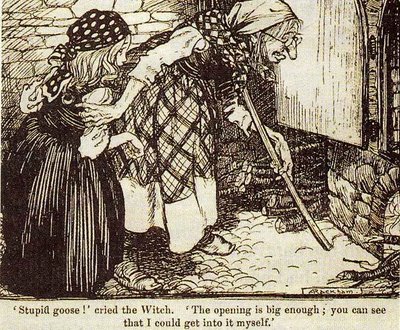
One thing you should be prepared for before reading these to your kids is the violence. These are not the cute Disney versions. Some of these are seriously disturbing and frightening. They are really a great glimpse into German and East Europe culture and what they considered frightening. Woods filled with witches, devils, wolves, and giants. Heads chopped off, eyes poked out, and children sold. Probably the most disturbing story was "The Juniper Tree". Wow.

None of this is to say that I didn't enjoy any of the stories. I found many of them to be fun reads. Of course, the famous one are the best, like "The Frog Prince", "The Sleeping Beauty", "Rumpelstiltskin", and "Snow-White and the Seven Dwarfs". But my most favorite was "The Shoes That Were Danced to Pieces". Twelve princesses who disappear every night to dance with the twelve cutest guys in the kingdom. Nice.

So, my advice to you is, purchase a "Selected Works" edition of the stories. That should give you all of the popular ones without having to wade through the not so fun one. But definitely read them. They are a fascinating glimpse not only German culture, but Western culture as a whole.